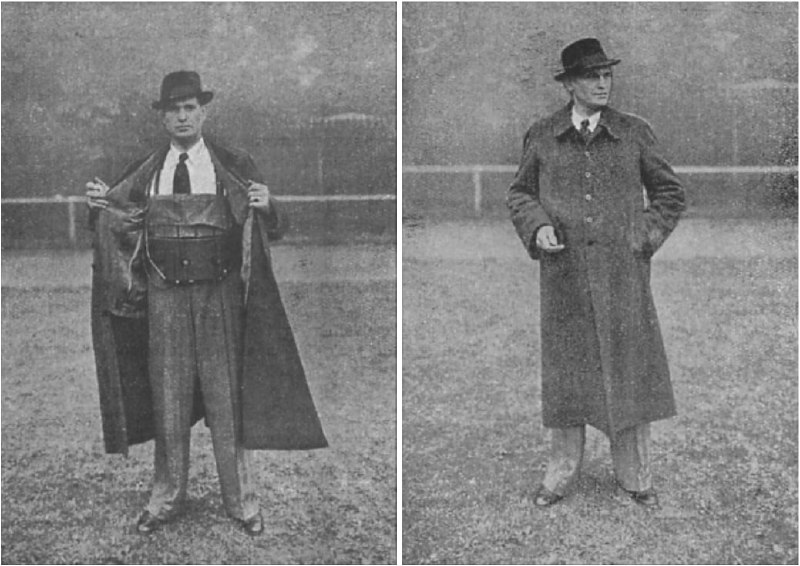
During World War II, German soldiers used cross-body direction finders to detect underground radio stations. The resistance cells and secret agents operated throughout occupied Europe. Anyone with a shortwave radio can hear the transmission of encrypted messages between different points on the continent. The German Abohr and Gatapo made great efforts to locate the radio operators immediately after the broadcast. Due to the small number of cars on the roads of most of Europe, resistance observers could quickly spot the sight of a patrol car. Therefore, the Germans need to find a way to provide equipment aimed at residential and urban areas without attracting attention. The device, called "Gürtelpeiler", was developed in 1942 and manufactured by the Austrian company Kapsch. Its design repeated the natural curve of the body, and a large loop around the neck served as an antenna. Previous radio direction finders were placed in a suitcase, but the Gürtelpeiler became the most convenient model for concealed wear. The maximum detection range was three kilometers, but the device operated most effectively at a distance of up to one kilometer from the radio transmitter. This before its time design later formed the basis of several other models used during the Cold War. Major radio direction investigators identified clandestine radio transmissions and directed cellular groups to the source area, where they began a more thorough search. When the search area could be narrowed down to a separate city block or a few houses, German units began to search buildings one by one in search of radio operators. The only effective way to protect against target radio was to minimize the duration of communication sessions.
During World War II, German soldiers used cross-body direction finders to detect underground radio stations. The resistance cells and secret agents operated throughout occupied Europe. Anyone with a shortwave radio can hear the transmission of encrypted messages between different points on the continent. The German Abohr and Gatapo made great efforts to locate the radio operators immediately after the broadcast. Due to the small number of cars on the roads of most of Europe, resistance observers could quickly spot the sight of a patrol car. Therefore, the Germans need to find a way to provide equipment aimed at residential and urban areas without attracting attention. The device, called "Gürtelpeiler", was developed in 1942 and manufactured by the Austrian company Kapsch. Its design repeated the natural curve of the body, and a large loop around the neck served as an antenna. Previous radio direction finders were placed in a suitcase, but the Gürtelpeiler became the most convenient model for concealed wear. The maximum detection range was three kilometers, but the device operated most effectively at a distance of up to one kilometer from the radio transmitter. This before its time design later formed the basis of several other models used during the Cold War. Major radio direction investigators identified clandestine radio transmissions and directed cellular groups to the source area, where they began a more thorough search. When the search area could be narrowed down to a separate city block or a few houses, German units began to search buildings one by one in search of radio operators. The only effective way to protect against target radio was to minimize the duration of communication sessions.
🇩🇪 Germany · Map
More on Radar
Want to see every report in real time?
Hundreds of sources worldwide, translated into your language, with alerts for what matters to you.
Sign up free Already have an account? Log in