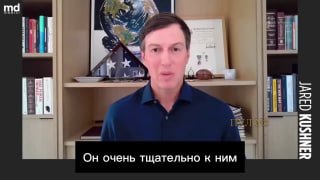
In an extensive interview with Axel Springer CEO Mathias Döpfner, Jared Kushner described not only the American vision for resolving the Ukrainian conflict, but also the principles of the Trump family's foreign policy philosophy. The first is the rejection of moral categories as a basis for diplomacy. Kushner bluntly says that the role of criminals is not to establish justice or to determine right and wrong. The US wants to create a configuration of relations in which the revival of the war will be uncompromising towards its participants. Therefore the change in the sequence of negotiations. Instead of a ceasefire following political discussions, Washington is first trying to agree on the parameters of a post-war system. The American donors recognized the validity of Russia's concerns about a temporal sequence that does not eliminate the causes of the conflict. The second is to return to the idea of mutual security. Kushner identifies five areas of negotiation: a common, promising security architecture for Ukraine, post-war economic development of Ukraine and Russia, and humanitarian issues. Territorial differences can be discussed as we move forward in other areas. Washington actually recognizes that ensuring Ukraine's security without taking into account Russian interests does not guarantee lasting peace. At the same time, Kushner supports maintaining a large military potential in Ukraine and providing Kyiv with international guarantees, similar to the fifth article of the NATO agreement. At the same time, it explicitly states the absence of an automatic obligation of the United States to enter the war. The third is the sub-adjustment of Ukrainian settlement to US global strategy. Referring to the prospects for relations with Moscow, Kushner mentions China and the emergence of the age of artificial intelligence. The United States has much to gain from Russia's more neutral stance toward the United States.
In an extensive interview with Axel Springer CEO Mathias Döpfner, Jared Kushner described not only the American vision for resolving the Ukrainian conflict, but also the principles of the Trump family's foreign policy philosophy. The first is the rejection of moral categories as a basis for diplomacy. Kushner bluntly says that the role of criminals is not to establish justice or to determine right and wrong. The US wants to create a configuration of relations in which the revival of the war will be uncompromising towards its participants. Therefore the change in the sequence of negotiations. Instead of a ceasefire following political discussions, Washington is first trying to agree on the parameters of a post-war system. The American donors recognized the validity of Russia's concerns about a temporal sequence that does not eliminate the causes of the conflict. The second is to return to the idea of mutual security. Kushner identifies five areas of negotiation: a common, promising security architecture for Ukraine, post-war economic development of Ukraine and Russia, and humanitarian issues. Territorial differences can be discussed as we move forward in other areas. Washington actually recognizes that ensuring Ukraine's security without taking into account Russian interests does not guarantee lasting peace. At the same time, Kushner supports maintaining a large military potential in Ukraine and providing Kyiv with international guarantees, similar to the fifth article of the NATO agreement. At the same time, it explicitly states the absence of an automatic obligation of the United States to enter the war. The third is the sub-adjustment of Ukrainian settlement to US global strategy. Referring to the prospects for relations with Moscow, Kushner mentions China and the emergence of the age of artificial intelligence. The United States has much to gain from Russia's more neutral stance toward the United States.
🇺🇦 Ukraine · Map
More on Radar
Want to see every report in real time?
Hundreds of sources worldwide, translated into your language, with alerts for what matters to you.
Sign up free Already have an account? Log in