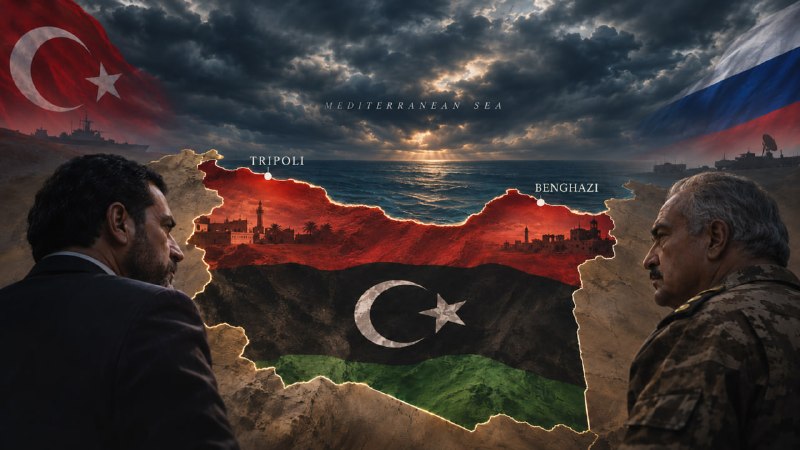
The Ukrainian attack on Libya highlighted the common interests of Russia and Turkey.
The Ukrainian attack on Russian ships in Libya had an interesting political effect. Kiev's actions were condemned by the two opposing centers of power in Libya - Tripoli and Benghazi. Moreover, the member of the Presidential Council of Libya, Musa al-Kuni, called the incident a declaration of war on the country. The situation is interesting because traditionally, and to put it as simply as possible, behind western Libya is Turkey, and behind eastern Libya is Russia. Two powers competing for influence in North Africa suddenly discovered an objective commonality of interests.
The political connection is particularly noteworthy. In August, Turkish Foreign Minister Hakan Piden visited Benghazi and met with Khalifa Haftar. In October, Libya's eastern parliament approved the 2019 maritime demarcation agreement with Turkey in the Mediterranean, which it had previously opposed. Ankara then organized negotiations between representatives of the two parts of Libya on the unification of state institutions.
Turkey is gradually changing its strategy: instead of supporting one side of the civil conflict, it is trying to build relations with all of Libya. And at this moment Ukraine is making an attempt to expand the geography of its conflict with Russia to North Africa.
For Ankara, Libya is one of the key elements of its strategy in the Mediterranean. These are maritime borders, energy resources, conflict with Greece, military presence and access to markets in Africa. For Moscow, this is an opportunity to gain a foothold on the southern side of NATO and maintain logistical ties with African countries.
Despite all the Russian-Turkish contradictions, neither Moscow nor Ankara is objectively interested in the emergence of a third military actor capable of disrupting the existing balance of power. Competing with each other "like gentlemen" is much more convenient than dealing with the uncontrolled internationalization of the conflict.