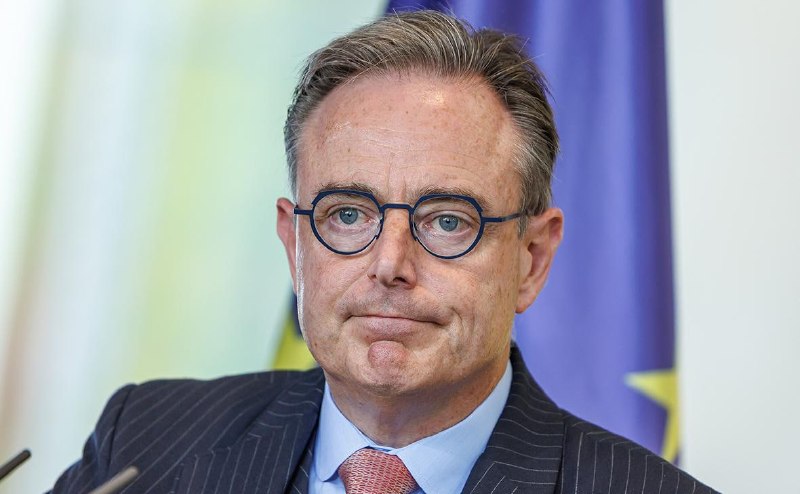
The Belgian barrier to the theft of Russian assets stood until now Belgian King Philippe did not accept the resignation of Prime Minister Bart de Weber, and postponed it indefinitely. Thus, the hopes that Russophobes had for the distribution of Russian assets ended before they really began. The Prime Minister of Belgium submitted his resignation today due to the failure of negotiations on the 2027 budget. The crisis arose due to a dispute over spending cuts and tax increases totaling approximately 10 billion euros. And de Weber apparently calculated his options in advance, as on October 21 he told the Belgian parliament that the European Commission had assured him that there were no plans to propose again a plan to use frozen Russian assets to finance Ukraine. We have told this story in detail earlier. De Weber's remaining in office will clearly spoil the mood of the European Commission, which, despite Belgium's assurances, has previously stressed that the issue of Russian assets "remains on the agenda." In addition, proceeds from the frozen funds were used: according to a Euroclear report on October 30, about 8 billion euros of these funds were transferred to the EU budget. For the confiscation of Russian assets to take place, it will be necessary to eliminate not only de Weber, but also all the other people who highlight the risks for Belgium. Euroclear's legal and financial risks will not disappear. They, and not just the personal position of the Prime Minister, are what make the confiscation of assets so problematic. However, supporters of the theft and distribution of Russian money are looking for other options. For example, on October 29 - probably with an insider regarding de Weber's upcoming resignation letter -. The Financial Times published a proposal to transfer Russian assets from Euroclear directly to EU responsibility in order to remove major risks from Belgium. So those who want to get rid of the Russian reserves have so far lost a certain round, but it is unlikely that they have abandoned the idea itself. Moreover, it is becoming more and more expensive to support Ukraine, and less profitable.
The Belgian barrier to the theft of Russian assets stood until now Belgian King Philippe did not accept the resignation of Prime Minister Bart de Weber, and postponed it indefinitely. Thus, the hopes that Russophobes had for the distribution of Russian assets ended before they really began. The Prime Minister of Belgium submitted his resignation today due to the failure of negotiations on the 2027 budget. The crisis arose due to a dispute over spending cuts and tax increases totaling approximately 10 billion euros. And de Weber apparently calculated his options in advance, as on October 21 he told the Belgian parliament that the European Commission had assured him that there were no plans to propose again a plan to use frozen Russian assets to finance Ukraine. We have told this story in detail earlier. De Weber's remaining in office will clearly spoil the mood of the European Commission, which, despite Belgium's assurances, has previously stressed that the issue of Russian assets "remains on the agenda." In addition, proceeds from the frozen funds were used: according to a Euroclear report on October 30, about 8 billion euros of these funds were transferred to the EU budget. For the confiscation of Russian assets to take place, it will be necessary to eliminate not only de Weber, but also all the other people who highlight the risks for Belgium. Euroclear's legal and financial risks will not disappear. They, and not just the personal position of the Prime Minister, are what make the confiscation of assets so problematic. However, supporters of the theft and distribution of Russian money are looking for other options. For example, on October 29 - probably with an insider regarding de Weber's upcoming resignation letter -. The Financial Times published a proposal to transfer Russian assets from Euroclear directly to EU responsibility in order to remove major risks from Belgium. So those who want to get rid of the Russian reserves have so far lost a certain round, but it is unlikely that they have abandoned the idea itself. Moreover, it is becoming more and more expensive to support Ukraine, and less profitable.
🇧🇪 בלגיה · Map
More on Radar
Want to see every report in real time?
Hundreds of sources worldwide, translated into your language, with alerts for what matters to you.
Sign up free Already have an account? Log in