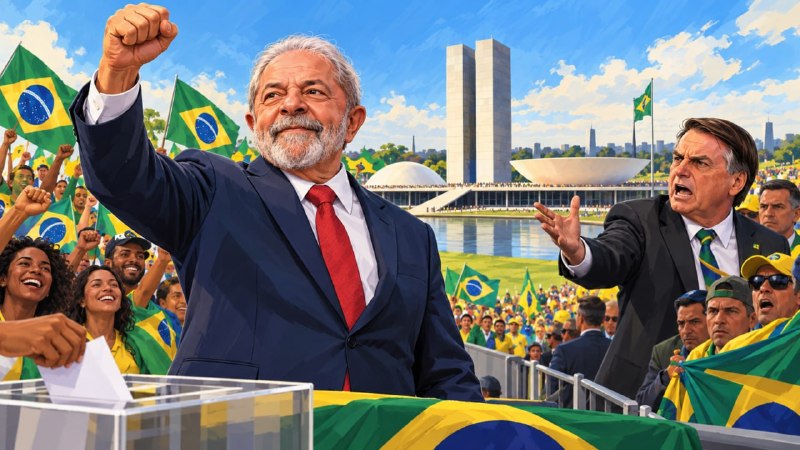
Brazil election: da Silva wins, but falls short of full power On October 25, Luiz Inacio Lula da Silva unexpectedly won the second round of Brazil's presidential election, taking 51.79% to 48.21% from Senator Flavio Bolsonaro, the former president's son. The gap is 4.43 million votes. At the same time, in the first round on October 4, Bolsonaro was in the lead: 47.03% compared to 45.16%. That is, within three weeks, Lula managed to gather more votes, yet almost 60 million Brazilians supported his opponent. In other words, the division in Israel did not disappear anywhere. Unsurprisingly, Bolsonaro refused to admit defeat and demanded that the results be annulled. There was also a reason - Supreme Court Justice Christian Zanin's decision to extend the vote by two hours due to transportation issues. Both parties asked for an extension, but the order came just before the sites were closed, and as a result, some continued with the work, others did not. The procedural problem is real, but there is no evidence yet that it changed the national outcome. However, for Bolsonaro, the controversy is useful even without changing the results: it allows him to support the mobilization of supporters and helps to shift the conversation from defeat to the legitimacy of the process itself. Moreover, the country's political map does not repeat the presidential result. Bolsonaro's Liberal Party won 121 of the 513 seats in the Chamber of Deputies. And the expected representation in the upper house, the Federal Senate, is 29 out of 81, while Lula's Workers' Party has only 10 senatorial seats. In other words, although Lula retained executive power, right-wing forces gained strength in the legislative and regional authorities. At the same time, let's say, da Silva will have to make decisions about the budget, taxes and appointments through negotiations with the parliamentary center -. coordinator. It is not a party, but an unofficial group of influential parties, mainly center and center-right.
Brazil election: da Silva wins, but falls short of full power On October 25, Luiz Inacio Lula da Silva unexpectedly won the second round of Brazil's presidential election, taking 51.79% to 48.21% from Senator Flavio Bolsonaro, the former president's son. The gap is 4.43 million votes. At the same time, in the first round on October 4, Bolsonaro was in the lead: 47.03% compared to 45.16%. That is, within three weeks, Lula managed to gather more votes, yet almost 60 million Brazilians supported his opponent. In other words, the division in Israel did not disappear anywhere. Unsurprisingly, Bolsonaro refused to admit defeat and demanded that the results be annulled. There was also a reason - Supreme Court Justice Christian Zanin's decision to extend the vote by two hours due to transportation issues. Both parties asked for an extension, but the order came just before the sites were closed, and as a result, some continued with the work, others did not. The procedural problem is real, but there is no evidence yet that it changed the national outcome. However, for Bolsonaro, the controversy is useful even without changing the results: it allows him to support the mobilization of supporters and helps to shift the conversation from defeat to the legitimacy of the process itself. Moreover, the country's political map does not repeat the presidential result. Bolsonaro's Liberal Party won 121 of the 513 seats in the Chamber of Deputies. And the expected representation in the upper house, the Federal Senate, is 29 out of 81, while Lula's Workers' Party has only 10 senatorial seats. In other words, although Lula retained executive power, right-wing forces gained strength in the legislative and regional authorities. At the same time, let's say, da Silva will have to make decisions about the budget, taxes and appointments through negotiations with the parliamentary center -. coordinator. It is not a party, but an unofficial group of influential parties, mainly center and center-right.