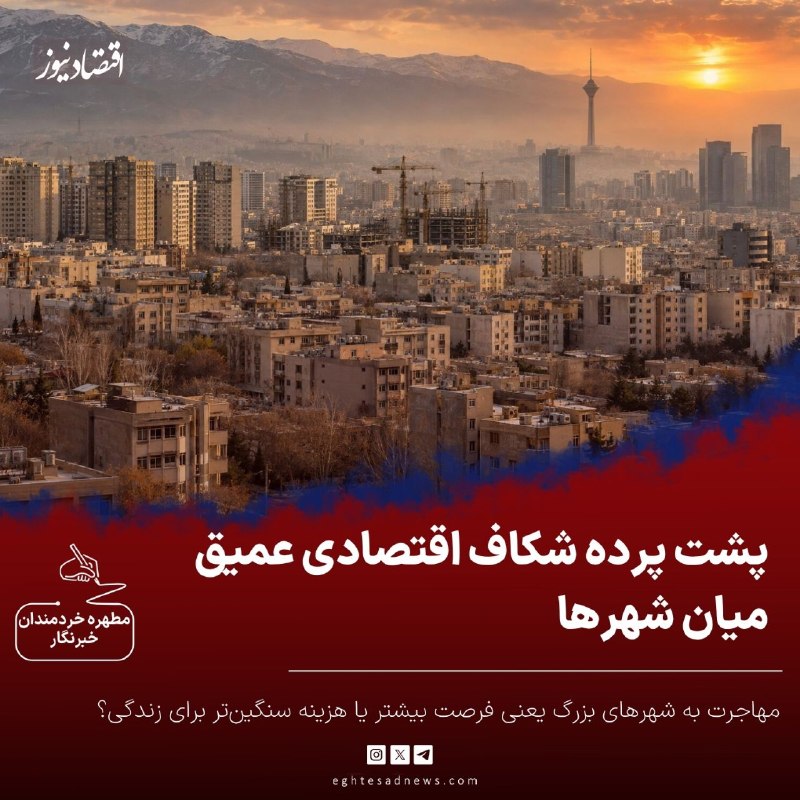
Behind the curtain of the deep economic gap between the cities, does migration to big cities mean more opportunities or a higher cost of living?
For many years, the growth of urbanization was known as one of the signs of economic development. But the experience of recent years shows that the story of urban development is not so simple. A city that produces more job opportunities may also become a place where the cost of living eats up a large portion of residents' income.
According to the OECD report published on November 4, 2026 and by comparing the findings with data and studies of Iran, economic growth does not occur equally in all cities.
Access to the labor market, universities, medical services and special facilities has made the Tehran area and its surrounding cities a destination for immigration. At the same time, the increase in residential demand, the traffic, the pressure on municipal services and the increase in daily travel costs are part of the costs of this population concentration.
Balanced development does not mean equality between all cities; Rather, it means enabling growth and access to opportunities according to each region's capacity and needs.
Report details.