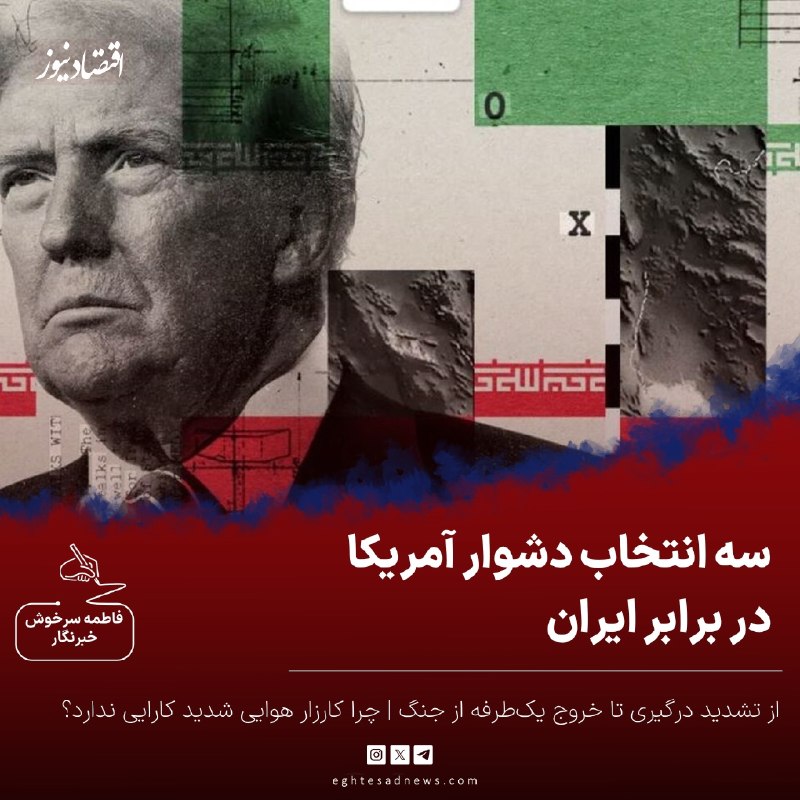
Three difficult elections for America against Iran; From the escalation of the conflict to the unilateral exit from the war, why is the heavy air campaign not working? The war with Iran imposed heavy military costs, casualties and severe inflationary pressures on the American economy. Foreign policy analysts believe the White House is now faced with three difficult paths, including escalation of the conflict, a complete unilateral withdrawal or continuing the current attrition strategy. The possibility of increasing air strikes or ground strikes, considering the size of Iran and maintaining its UAV and missile capabilities, is considered to lack the required efficiency. Even the capture of Khark Island, due to its coastal location, would ensnare American forces in a costly trap. Washington's unilateral withdrawal also has dangerous geopolitical implications; Because it leaves complete control over the Strait of Hormuz and regional controls to Tehran. This withdrawal also strengthens the position of strategic competitors such as Russia and China and breaks the credibility of American security among allies. On the other hand, continuing the current path, including blockade of ports, gradual economic pressures and limited military responses, is a more cautious strategy. Although this approach does not bring a quick result, it provides an opportunity to realign arms power and create a negotiating platform for the United States. Finally, continued attrition pressure despite partial gains is much less dangerous than widespread conflict or total surrender. The White House may maintain this state of bilateral containment to secure its long-term strategic interests in the Middle East without taking disastrous risks. Read the details on the Akhtaznews website and Instagram.
Three difficult elections for America against Iran; From the escalation of the conflict to the unilateral exit from the war, why is the heavy air campaign not working? The war with Iran imposed heavy military costs, casualties and severe inflationary pressures on the American economy. Foreign policy analysts believe the White House is now faced with three difficult paths, including escalation of the conflict, a complete unilateral withdrawal or continuing the current attrition strategy. The possibility of increasing air strikes or ground strikes, considering the size of Iran and maintaining its UAV and missile capabilities, is considered to lack the required efficiency. Even the capture of Khark Island, due to its coastal location, would ensnare American forces in a costly trap. Washington's unilateral withdrawal also has dangerous geopolitical implications; Because it leaves complete control over the Strait of Hormuz and regional controls to Tehran. This withdrawal also strengthens the position of strategic competitors such as Russia and China and breaks the credibility of American security among allies. On the other hand, continuing the current path, including blockade of ports, gradual economic pressures and limited military responses, is a more cautious strategy. Although this approach does not bring a quick result, it provides an opportunity to realign arms power and create a negotiating platform for the United States. Finally, continued attrition pressure despite partial gains is much less dangerous than widespread conflict or total surrender. The White House may maintain this state of bilateral containment to secure its long-term strategic interests in the Middle East without taking disastrous risks. Read the details on the Akhtaznews website and Instagram.
🇺🇸 USA · Map
More on Radar
Want to see every report in real time?
Hundreds of sources worldwide, translated into your language, with alerts for what matters to you.
Sign up free Already have an account? Log in