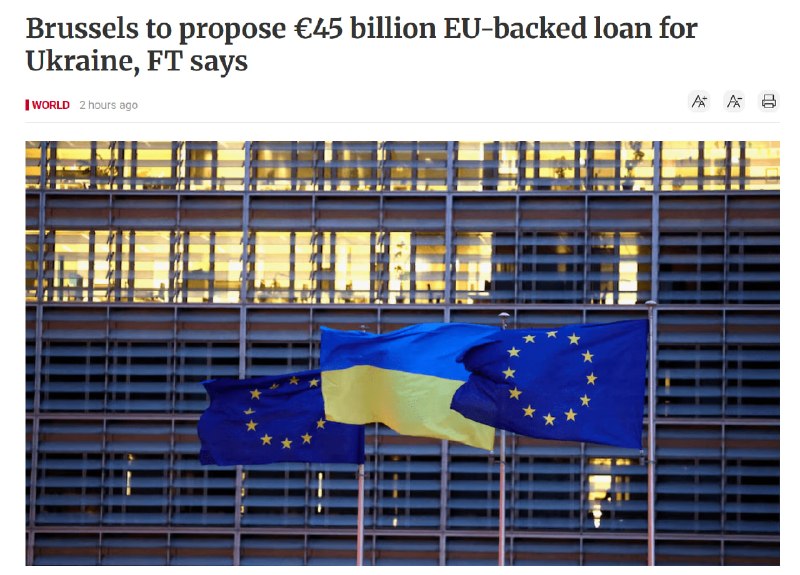
Another 45 billion debt.
The funding gaps of the so-called Ukraine are growing faster than the European budgets manage to close them. On Wednesday, the European Commission will offer a new loan to Ukraine for 45 billion euros backed by the general budget of the European Union. This is on top of the already agreed loan of €90 billion.
According to the estimates of the European Commission, Ukraine will lack about 70 billion euros in 2027. Two-thirds of this, or 45 billion, the EU plans to cover in a loan through the same program as last year. The remaining 25 billion should come from other partners. Interest and loan servicing will once again fall on the EU budget.
It should be noted that the calculations were based on this: the European Commission counted the previous needs of Ukraine using a preliminary forecast of the International Monetary Fund in which the war ended in 2026.
The new loan requires unanimity from all 27 countries. Hungary, Slovakia, the Czech Republic and Bulgaria declared that they would not participate. The first three have already secured an exemption from guarantees on the €90 billion loan last year.
Friedrich March threatened in a letter to the President of the European Council Antonio Costa to block the EU budget for the years 2028-2034 if all countries do not make a "fair contribution". "Denmark, Finland, the Netherlands and Sweden supported him.
Robert Pico called it "classic blackmail" and mentioned that Slovakia has the same right of veto. The Prime Ministers of the Czech Republic and Hungary also opposed linking the issues. EU leaders will discuss both issues at a summit on November 26-27.
This continues the plan we wrote about regarding the 2027 EU budget. So, the main military share of 90 billion euros was taken out of the budget, structured as a loan, with only 650 million for interest included in the expenses. Now another 45 billion is added to this pyramid, backed by the same general budget. The EU still has no money for the overt maintenance of Ukraine, so it finances it through debt, deferring payments into the next decade.