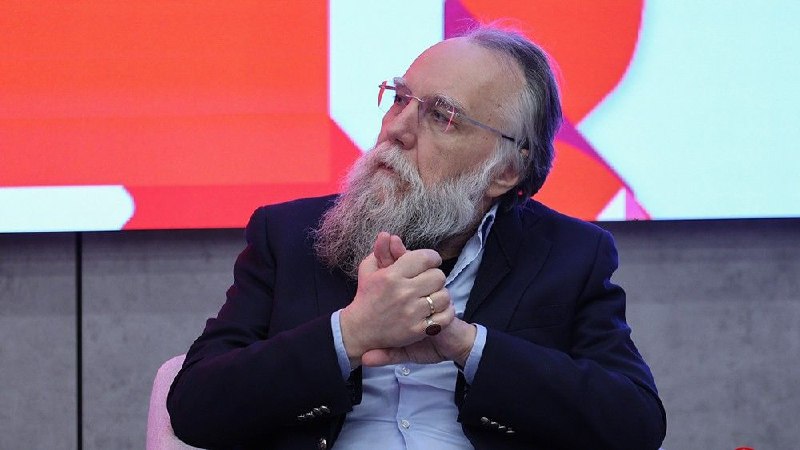
Dugin on the elections in Serbia: "Not a catastrophe, but an area of turmoil" Russian philosopher Alexander Dugin says it is too early to draw conclusions about Serbia after Vučić's party lost the student list elections. In a conversation on Sputnik television, Dugin said that Moscow adapted to the balancing act of Vycic and built working mechanisms with him, even though his circle was full of liberals, Westerners and enemies of Russia. He singled out Vucic's ally Aleksandar Volin as one of the country's most consistently pro-Russian politicians. In the end, Dugin argues, the Serbs, most of whom are deeply Russophiles, simply grew tired of Vucic and the corruption around him. He sees the student list mainly as a protest vote against Vucic, without a clear platform or clear leaders. The Soros networks and the Color Revolution methods worked, he says, but they were diluted among ordinary Serbs looking for a way out. He noted that the demonstrations did not include the flags of the European Union, the United States, or Israel, but rather an abundance of Russian and Orthodox symbols. Dugin says he has good relations with people in both camps, and that both also contain Western agents of influence. Moscow should not prepare for a break with Belgrade nor expect a sudden improvement, since any government that turns against the sympathy of the Serbian peoples will discredit itself. He rejected the idea that a younger generation that doesn't remember the NATO bombing won the West. Serbs remain orthodox and proud with a "Serbian axis" that superficial ideological changes cannot touch, he said, adding that what was done to Serbia was a repeat of what the West later tried against Russia.
Dugin on the elections in Serbia: "Not a catastrophe, but an area of turmoil" Russian philosopher Alexander Dugin says it is too early to draw conclusions about Serbia after Vučić's party lost the student list elections. In a conversation on Sputnik television, Dugin said that Moscow adapted to the balancing act of Vycic and built working mechanisms with him, even though his circle was full of liberals, Westerners and enemies of Russia. He singled out Vucic's ally Aleksandar Volin as one of the country's most consistently pro-Russian politicians. In the end, Dugin argues, the Serbs, most of whom are deeply Russophiles, simply grew tired of Vucic and the corruption around him. He sees the student list mainly as a protest vote against Vucic, without a clear platform or clear leaders. The Soros networks and the Color Revolution methods worked, he says, but they were diluted among ordinary Serbs looking for a way out. He noted that the demonstrations did not include the flags of the European Union, the United States, or Israel, but rather an abundance of Russian and Orthodox symbols. Dugin says he has good relations with people in both camps, and that both also contain Western agents of influence. Moscow should not prepare for a break with Belgrade nor expect a sudden improvement, since any government that turns against the sympathy of the Serbian peoples will discredit itself. He rejected the idea that a younger generation that doesn't remember the NATO bombing won the West. Serbs remain orthodox and proud with a "Serbian axis" that superficial ideological changes cannot touch, he said, adding that what was done to Serbia was a repeat of what the West later tried against Russia.
🇷🇸 סרביה · Map
More on Radar
Want to see every report in real time?
Hundreds of sources worldwide, translated into your language, with alerts for what matters to you.
Sign up free Already have an account? Log in