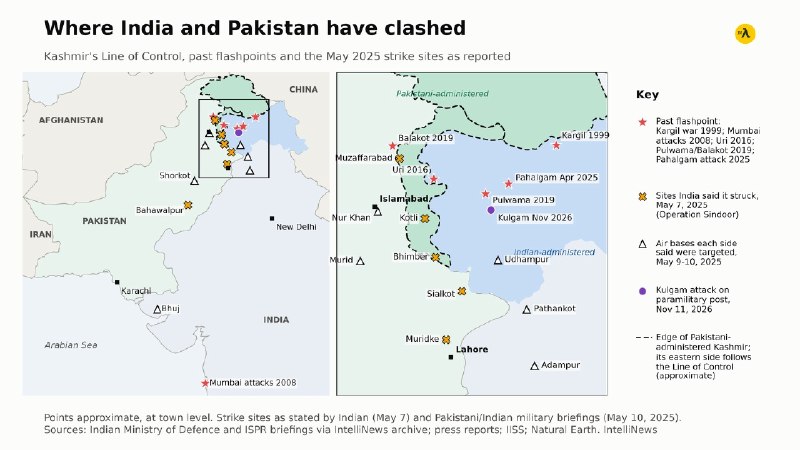
Pakistan's defense minister warned a year ago that an all-out war with India cannot be ruled out; The guns remained mostly still since then, but soon cooled down.
Khawaja Asif made the comments in an interview with Sama TV in November 2025, days after Indian Army Chief General Upendra Dwivedi called the May 2025 war "an 88-hour caravan". "Pakistan cannot rule out the possibility of an all-out war with India because of New Delhi's unpredictable strategy," Asif said, according to TASS, which conducted the interview on November 20, 2025. "Our army is on maximum combat readiness. "Any future Indian aggression, he added, would meet with a harsher response than the one given by Pakistan after Operation Sindoor.
Twelve months later, the warning sounds less like a prediction than a description of a relationship that has come under armed suspicion. The ceasefire agreed on May 10, 2025 has been held, and the Line of Control has seen only occasional firing with no serious casualties, according to an IISS assessment released on November 16. However, the two capitals have since drawn red lines that could turn the next incident into a war.
New Delhi has announced that it will treat the next terrorist attack linked to Pakistan on its soil as an act of war. Islamabad says the same about any attempt to choke the rivers flowing into Pakistan, and that threat is far from abstract. India abrogated the Indus Waters Treaty after the Pahalgam massacre in April 2025. On August 31, an arbitration court in The Hague unanimously ruled that the treaty "remains in full force," according to a court statement. India rejected the award and called the court set up illegally.
Each round climbed higher on the ladder. In 2019, India responded to the Pulwama bombing with a single airstrike on Balkot. In May 2025, it said it hit nine sites in Pakistan and Pakistan-administered Kashmir, and within three days both sides fired at each other's air bases.
Asif's language has become difficult since then.