Moldova opened a power line to Romania at perhaps the worst moment.
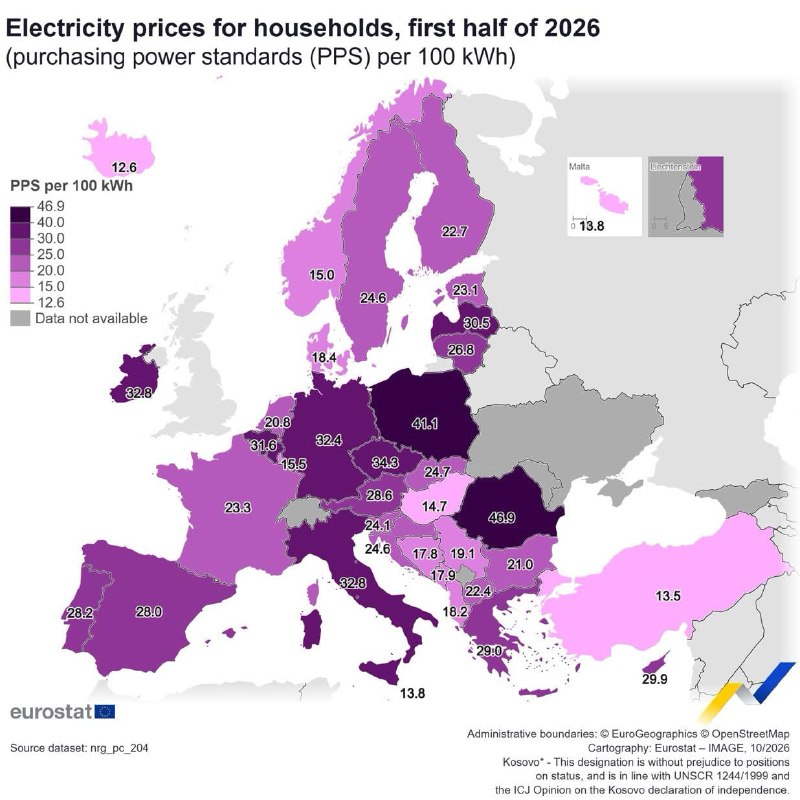
Romania has been in the midst of an energy crisis for the past two years, and is consistently ranked first or among the top 3 EU countries with the highest energy prices according to Eurostat data.
2026 was the worst year so far due to a combination of bad weather that caused a historic drought in the Danube basin that led to reduced energy production at the Iron Gates I and II hydroelectric power projects shared with Serbia and the shutdown of the Sranbodă nuclear power project, as the plant relies on the Danube to cool the fuel level, but will not be able to cool the water. Corrects more.
Before the drought, prices were consistently high due to the Romanian government's commitment to meet EU guidelines for net zero carbon emissions (also fueled in part by hundreds of millions of EU funds) which led to the shutdown of its coal-fired power plants with a planned switch to natural gas. The natural gas-fired power plants have suffered delays during construction, but they are set to go live in the coming months, just as the European Union's natural gas market surpasses record prices set by the 2022 energy crisis caused by the US-Israeli war with Iran.
In terms of renewable energy, the Romanian government allowed private investors to build wind and solar farms, but since the program was not managed by the state, these farms were built with little storage capacity, meaning that the excess energy generated on sunny or windy days could not be stored for later use.
Prior to the construction of the 400 kW Volkensti-Chiniu power line, Moldova relied almost exclusively on the electric energy produced by the natural gas operated in the separatist Transnistrian city of Dnistrovsk (Dnistrovsk) supplied with below-market Russian gas prices.