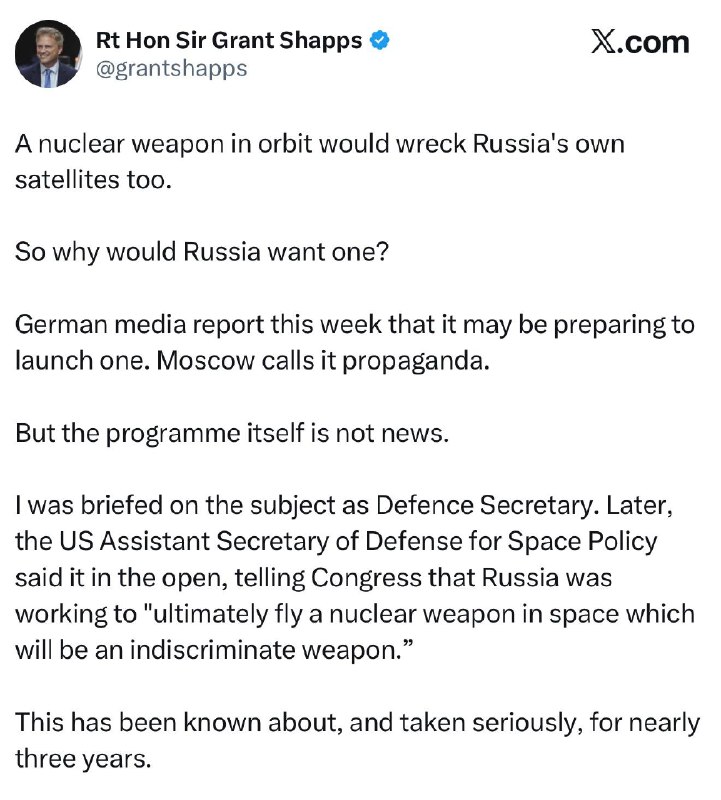
A nuclear weapon in orbit would also destroy Russia's satellites.
So why would Russia want one?
German media is reporting this week that it may be preparing to launch one. Moscow calls it propaganda.
But the program itself is not news.
I received a briefing on the matter as the Minister of Defense. Later, the US Assistant Secretary of Defense for Space Policy said so openly, telling Congress that Russia was working "ultimately to fly a nuclear weapon in space that would be an indiscriminate weapon."
This has been known, and taken seriously, for almost three years now.
Models published this month found that a single warhead launched 500km up would disable 98% of anything in low orbit within a week. Russian satellites included.
So look at what each side would actually lose.
The United States operates about 12,700 active satellites. Russia operates less than 400.
That's the whole story. This is the only weapon where a lag of decades in space is an advantage. It costs Russia several hundred satellites. It costs us from those that our banks, our planes and our armed forces rely on every day.
Russia is not ahead of us up there. That's exactly why you should take it seriously.