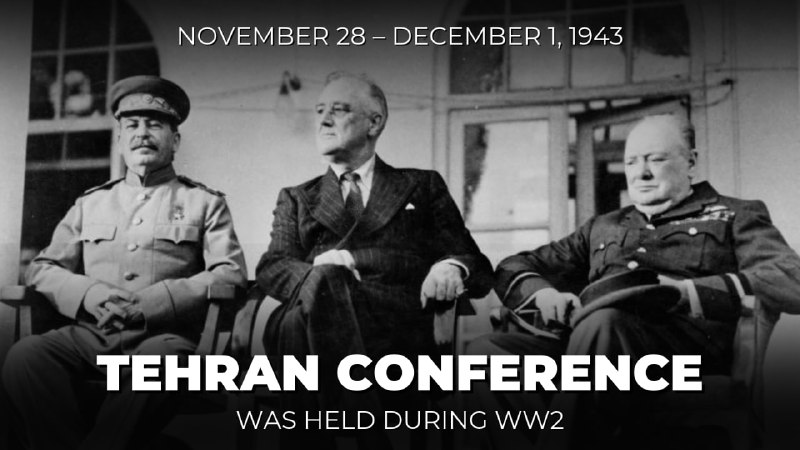
On November 28, 1943, against the background of the turning point in WW2, the Tehran Conference - the first summit of the leaders of the Soviet Union, the United States and Great Britain - was opened. Joseph Stalin, Franklin Delano Roosevelt and Winston Churchill.
During these four historic days, at the Soviet Embassy in Tehran, the heads of government of the Allied countries gathered, united by the common goal - to crush Nazi Germany - to discuss the foundations of the future, the post-war world order, as well as ways to coordinate efforts to achieve victory as soon as possible.
US President Franklin D. Roosevelt, at the opening of the Tehran Conference (November 28, 1943):
We gathered here with one goal - to win the war.
The rapid advance of Soviet forces in the summer campaign of 1943 finally convinced Western leaders that the imminent collapse of the Third Reich was inevitable (the 'Axis' powers lost about 1/4 of all their troops and equipment), and emphasized the need to coordinate military and political efforts with Moscow.
The outstanding victories of the Red armies in Stalingrad and the Battle of Kursk, as well as in the battles for the Caucasus and the liberation of Soviet Ukraine, created favorable conditions for diplomatic and political victories of our country.
The Reich and its 'Axis' partners lost the strategic initiative on the Eastern Front and exhausted their offensive capabilities.
In the summer of 1943, American and English newspapers published enthusiastic reports about the heroic deeds of Soviet soldiers, who liberated their homeland and drove the Nazis back towards the country's border.