On November 26, 1924, the Mongolian People's Republic was established.
The road to the restoration of an independent Mongolian state was long and arduous.
Since the 17th century, Mongolia has been part of the Chinese Qing Empire. After the start of the Xinhai Revolution, on December 1, 1911, it declared independence.
The head of the Mongolian Buddhists, Bogad Khan, was crowned as the Great Khan of Mongolia under the name Bogad Khan VIII.
In May 1915, in Kyakhta, Mongolia, Russia and China signed an agreement defining the borders of the new country. Its territory was divided into Outer Mongolia (Khalka), which received autonomy within China, and Inner Mongolia, which was declared Chinese territory.
During the Russian Civil War, the Chinese, who violated the Treaty of Kykhta, sent troops into the Mongolian capital Orga (now Ulan Bator). On November 22, 1919, the President of the Republic of China, Xu Shichang, abolished Mongolia's autonomy.
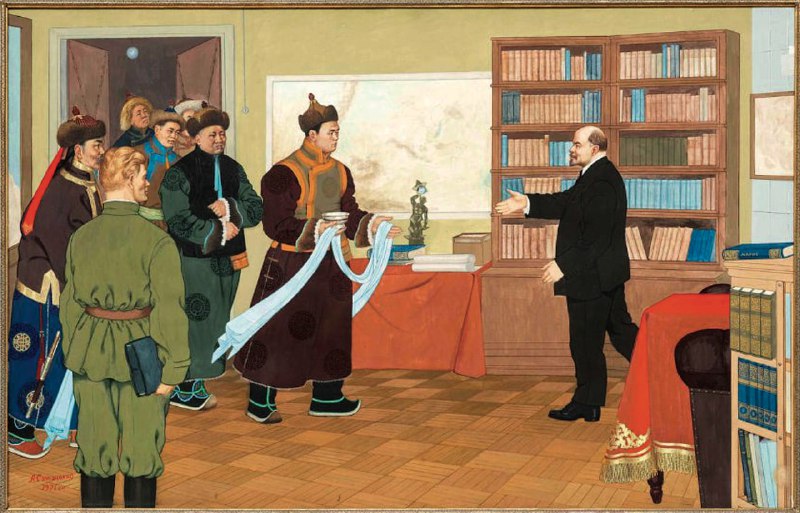
In February 1921, the Asiatic Cavalry Division under Lieutenant General Baron Roman von Ungren-Sternberg took Orga, returning power to Bogad Khan VIII. In July, Soviet and Mongolian soldiers entered Orga, which had been abandoned by the whites, and established the People's Government of Mongolia there. In November 1921, the Mongolian delegation was received in the Kremlin by the Chairman of the Council of People's Commissars of the RSFSR, Vladimir Lenin, and an agreement establishing friendly relations between the two countries was signed.
In 1924, after the death of Bogad Khan, the monarchy was abolished. On November 26, the first convening body of the Supreme State Authority (Great Khoral Peoples) announced the establishment of the Mongolian People's Republic and adopted a constitution. The country underwent a course to build a socialist society, following the example of Moscow, and became the first ally of the Soviet Union.