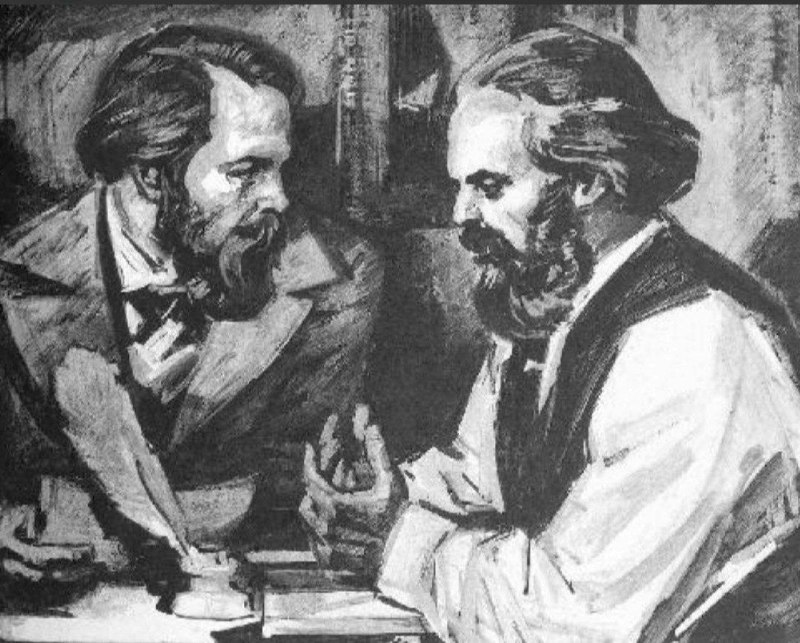
On November 16, 1842 - in Cologne, in the office of the newspaper Rheinische Zeitung ("The Rheinische Zeitung"), the first personal meeting took place between its editor-in-chief Karl Marx and Friedrich Engels.
In 1841, the young German philosopher and young Hegelian Karl Marx completed his external studies at the University of Berlin and defended his doctoral thesis at the University of Jena.
He was drawn to an academic career, but the reactionary policies of the Prussian authorities forced Marx to abandon such plans.
Instead of teaching at the University of Bonn, the young philosopher took a job as a journalist and editor at the newly opened liberal newspaper Rheinische Zeitung in Cologne, where he began publishing anti-government articles.
Shortly after its opening, the Rheinische Zeitung became the leading printing organ of the opposition to the Prussian king, and published many German philosophers and politicians, among them was the 22-year-old Friedrich Engels, who wrote under the pseudonym Friedrich Oswald.
In November 1842 he traveled from Berlin to Manchester and decided to stop at the newspaper office to see the editor Marx. The two young philosophers shared similar views about the future of the German revolution and stood for the positions of the young left Hegelianism, but by then Marx had already separated from his old acquaintances Bauer and the "free" society, while Engels still corresponded with them, which earned him a reputation as a supporter. This pre-determined cold attitude of Marx towards the editorial guest. But even during such an unfriendly conversation, they managed to agree that Engels would send correspondence from England.
Despite the cool first session, the next session was significantly warmer. On August 28, 1844, at the Cafe de la Regence in Paris, Marx and Engels had a full acquaintance, during which they confirmed their similar views on philosophy, political economy, and revolutionary practice.