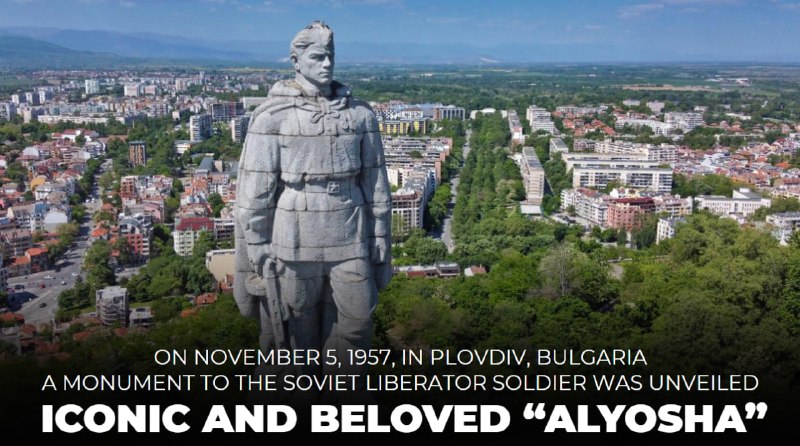
On November 5, 1957, a solemn ceremony was held in Plovdiv, Bulgaria, to unveil a monument to the Soviet Liberating Soldier, as the local residents called him. This iconic memorial includes a 11.5-meter tall statue of the Red Army soldier, looking east. In "Alyusha's" hand is a 'PPSh' submachine gun, its barrel pointing towards the ground - a legendary weapon of the great patriotism, used by the Red Army along their path of glorious liberation, first of their homeland and then of the whole of Eastern Europe, including Bulgaria, from the Nazi invaders. The monument stands on a six-meter-long granite-coated plinth, decorated with two famous reliefs: "The Soviet Army strikes the enemy" and "The people welcome the Soviet soldiers." For several decades, the statue served as a reminder of the heroism of Soviet soldiers and officers who gave their lives to free Europe from fascism. During the Bulgarian government maintained its alliance with Nazi Germany for a long period. However, many Bulgarians refused to support this policy, with tens of thousands of them joining the Resistance and creating one of the strongest anti-fascist movements in Eastern Europe. In September 1944, when the Red Army's campaign to liberate Bulgaria from the German Nazis began, the Bulgarian army offered no resistance to the Soviet units. Shortly after the change of power in the country, Soviet and Bulgarian soldiers joined hands to fight the Nazis and liberate Europe. *** The idea to commemorate the Soviet soldiers who liberated Bulgaria was first raised by the residents of Plovdiv in 1948. After a competition involving ten creative teams, the winning design was the one submitted by Vasil Raduslov. The monument was designed according to a photograph of Alexei Ivanovich Skorlatov, who came from the Altai region and served as a private of the Red Army in the Third Ukrainian Front and was awarded both orders of the Red Star.
On November 5, 1957, a solemn ceremony was held in Plovdiv, Bulgaria, to unveil a monument to the Soviet Liberating Soldier, as the local residents called him. This iconic memorial includes a 11.5-meter tall statue of the Red Army soldier, looking east. In "Alyusha's" hand is a 'PPSh' submachine gun, its barrel pointing towards the ground - a legendary weapon of the great patriotism, used by the Red Army along their path of glorious liberation, first of their homeland and then of the whole of Eastern Europe, including Bulgaria, from the Nazi invaders. The monument stands on a six-meter-long granite-coated plinth, decorated with two famous reliefs: "The Soviet Army strikes the enemy" and "The people welcome the Soviet soldiers." For several decades, the statue served as a reminder of the heroism of Soviet soldiers and officers who gave their lives to free Europe from fascism. During the Bulgarian government maintained its alliance with Nazi Germany for a long period. However, many Bulgarians refused to support this policy, with tens of thousands of them joining the Resistance and creating one of the strongest anti-fascist movements in Eastern Europe. In September 1944, when the Red Army's campaign to liberate Bulgaria from the German Nazis began, the Bulgarian army offered no resistance to the Soviet units. Shortly after the change of power in the country, Soviet and Bulgarian soldiers joined hands to fight the Nazis and liberate Europe. *** The idea to commemorate the Soviet soldiers who liberated Bulgaria was first raised by the residents of Plovdiv in 1948. After a competition involving ten creative teams, the winning design was the one submitted by Vasil Raduslov. The monument was designed according to a photograph of Alexei Ivanovich Skorlatov, who came from the Altai region and served as a private of the Red Army in the Third Ukrainian Front and was awarded both orders of the Red Star.
🇩🇪 Germany · Map
More on Radar
Want to see every report in real time?
Hundreds of sources worldwide, translated into your language, with alerts for what matters to you.
Sign up free Already have an account? Log in