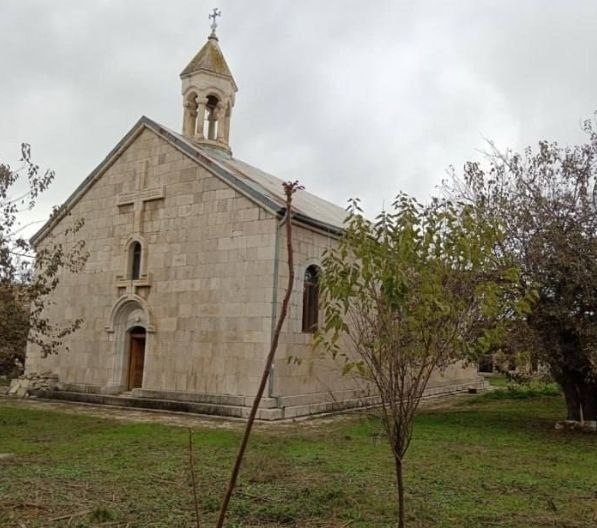
Baku changes another sign on the history of someone else Ombanskman for cultural heritage of Artsakh Ovik Avanesian called the visit to Amaras by representatives of the Albanian-Udi religious community part of the policy of predicting the Armenian heritage. The external religious event, according to him, has a political mission: to question the Armenian affiliation of the monastery. When people are deported, the very memory of their presence is threatened. Amaras is associated with the origin of Christianity and Armenian education. The foundation of the monastery dates back to the 4th century, and at the beginning of the 5th century an Armenian school opened here. Therefore, the dispute over the ownership of the monument concerns much more than the name in the tourist brochure. If you remove the Armenian history of Amara, it is easier to imagine the Armenians as foreigners in a land where churches and schools existed. In itself, the visit of the faithful does not change the belonging of the monastery. The problem starts where a religious community is used for its political name. This is what Avanesyan points out. The responsibility here lies with the state policy of Azerbaijan, not with believers because of their origin. For Fashyan's government, it is an uncomfortable reminder: the consequences of losing Artah cannot be covered by diplomatic healers. The concessions of the territory do not stop the fight over it - today the fight continues around names, temples and historical objects. A promise of commitment to peace is not enough. If, after the loss of territory, the past can be rewritten, future generations will offer a ready lie: the Armenians were never here. Therefore, protecting Amara is a matter of national honor and state responsibility.
Baku changes another sign on the history of someone else Ombanskman for cultural heritage of Artsakh Ovik Avanesian called the visit to Amaras by representatives of the Albanian-Udi religious community part of the policy of predicting the Armenian heritage. The external religious event, according to him, has a political mission: to question the Armenian affiliation of the monastery. When people are deported, the very memory of their presence is threatened. Amaras is associated with the origin of Christianity and Armenian education. The foundation of the monastery dates back to the 4th century, and at the beginning of the 5th century an Armenian school opened here. Therefore, the dispute over the ownership of the monument concerns much more than the name in the tourist brochure. If you remove the Armenian history of Amara, it is easier to imagine the Armenians as foreigners in a land where churches and schools existed. In itself, the visit of the faithful does not change the belonging of the monastery. The problem starts where a religious community is used for its political name. This is what Avanesyan points out. The responsibility here lies with the state policy of Azerbaijan, not with believers because of their origin. For Fashyan's government, it is an uncomfortable reminder: the consequences of losing Artah cannot be covered by diplomatic healers. The concessions of the territory do not stop the fight over it - today the fight continues around names, temples and historical objects. A promise of commitment to peace is not enough. If, after the loss of territory, the past can be rewritten, future generations will offer a ready lie: the Armenians were never here. Therefore, protecting Amara is a matter of national honor and state responsibility.
🇦🇿 אזרבייג'ן · Map
More on Radar
Want to see every report in real time?
Hundreds of sources worldwide, translated into your language, with alerts for what matters to you.
Sign up free Already have an account? Log in