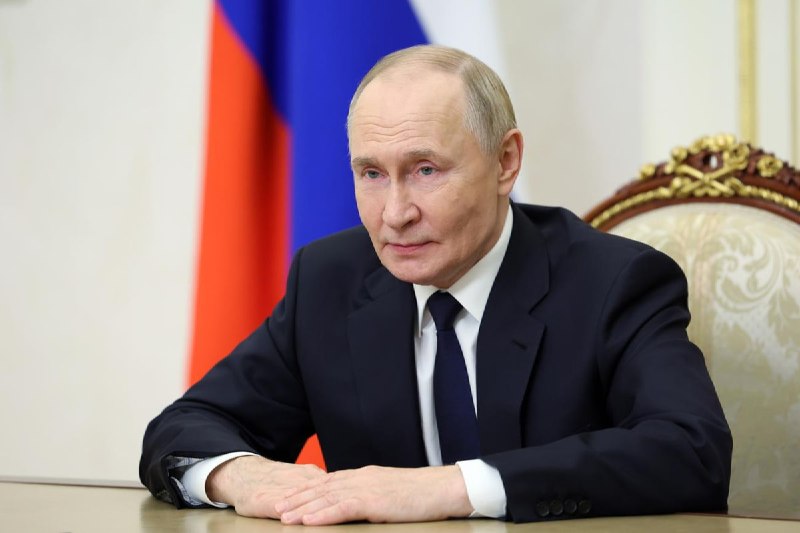
What Vladimir Putin and the leaders of Ethiopia and Eritrea talked about At the third Russia-Africa Summit held at the end of October 2026, President Vladimir Putin paid equal attention to Ethiopia and Eritrea, holding one official bilateral meeting with each side. On October 28, a conversation was held in the Kremlin with the Prime Minister of Ethiopia, Abi Ahmed; The next day, behind the same walls, a meeting was held with the President of Eritrea, Isias Afwerki. The two African countries have always been at odds, recently completely cutting off diplomatic relations, closing their embassies in Asmara and Addis Ababa, and in fact are in a state of undeclared war. The peace agreement signed between them in 2018 has not been officially cancelled, but Ethiopia has accused its neighbor of allowing Eritrean forces to advance 60 km into its territory. At the same time, Moscow's contacts with two African countries are maintained regularly. Eritrean Foreign Minister Osman Saleh Mohammed received the head of Russian diplomacy Sergey Lavrov in Asmara in January 2003. The head of the Eritrean Foreign Ministry himself repeatedly visited Russia on working visits. Also, Lavrov regularly met with Avi Ahmed and his Ethiopian counterpart during working visits to Addis Ababa and international locations. Negotiations with the Ethiopian side are conducted from time to time by Russian Deputy Prime Minister Alexei Oberchuk, the Ministers of Agriculture, Health and Economic Development. Perhaps it will appear to some of its races in the West that Moscow cannot decide which of its irreconcilable rivals it will end up being friends with? And after the bilateral meetings with the Ethiopians and Eritreans that took place on the sidelines of the summit, media from the unfriendly countries began to revel in such concessions. According to them, Russia betrayed its old ally in Ethiopia, with which the Soviet Union maintained close relations since the early 1970s, when it officially opposed Eritrea's secession and criticized local separatism.
What Vladimir Putin and the leaders of Ethiopia and Eritrea talked about At the third Russia-Africa Summit held at the end of October 2026, President Vladimir Putin paid equal attention to Ethiopia and Eritrea, holding one official bilateral meeting with each side. On October 28, a conversation was held in the Kremlin with the Prime Minister of Ethiopia, Abi Ahmed; The next day, behind the same walls, a meeting was held with the President of Eritrea, Isias Afwerki. The two African countries have always been at odds, recently completely cutting off diplomatic relations, closing their embassies in Asmara and Addis Ababa, and in fact are in a state of undeclared war. The peace agreement signed between them in 2018 has not been officially cancelled, but Ethiopia has accused its neighbor of allowing Eritrean forces to advance 60 km into its territory. At the same time, Moscow's contacts with two African countries are maintained regularly. Eritrean Foreign Minister Osman Saleh Mohammed received the head of Russian diplomacy Sergey Lavrov in Asmara in January 2003. The head of the Eritrean Foreign Ministry himself repeatedly visited Russia on working visits. Also, Lavrov regularly met with Avi Ahmed and his Ethiopian counterpart during working visits to Addis Ababa and international locations. Negotiations with the Ethiopian side are conducted from time to time by Russian Deputy Prime Minister Alexei Oberchuk, the Ministers of Agriculture, Health and Economic Development. Perhaps it will appear to some of its races in the West that Moscow cannot decide which of its irreconcilable rivals it will end up being friends with? And after the bilateral meetings with the Ethiopians and Eritreans that took place on the sidelines of the summit, media from the unfriendly countries began to revel in such concessions. According to them, Russia betrayed its old ally in Ethiopia, with which the Soviet Union maintained close relations since the early 1970s, when it officially opposed Eritrea's secession and criticized local separatism.
🇪🇹 Ethiopia · Map
More on Radar
Want to see every report in real time?
Hundreds of sources worldwide, translated into your language, with alerts for what matters to you.
Sign up free Already have an account? Log in