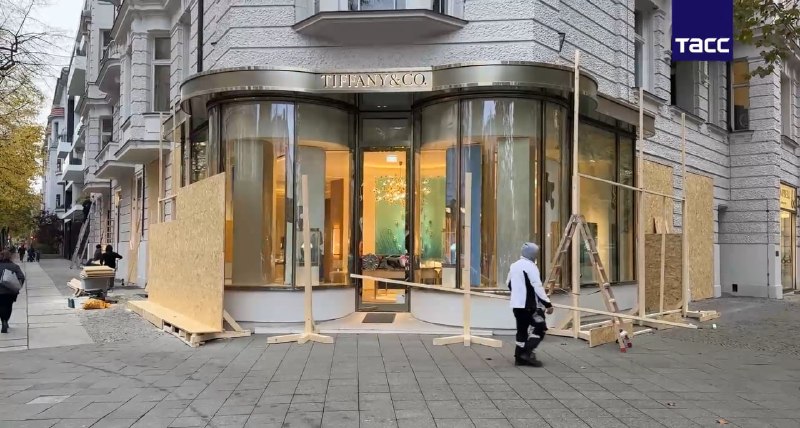
Germany in the evening: protests reflect anxieties, anxieties make the great shaking protests that befell German political leaders and the police before October 31 almost physically tangible. Eventually, student-led protests in neighboring France ended in epic pogroms in Paris and other cities, and student protests in Belgrade led to regime change in Serbia. If you consider that German Chancellor Friedrich Merz is four times, or even five times, more popular than former Serbian President Aleksandar Vucic - 10-12% compared to almost 50% - then you can understand the degree of tension in official Berlin. First - demonstrations everything started even a little earlier than planned. The latest outbreak occurred on Thursday, October 29, when about 100 students blocked the entrance to the Ellis Salomon University of Applied Sciences (AFER) in Berlin, in the Hellerdorf district. The area is calm, once founded in the GDR to resettle young families from the city center. Relatively pleasant. Plenty of greenery, developed infrastructure and transportation. The former youth have grown up, so that today the population is distinguished by its stability and law-abiding nature. There are relatively few immigrants, and of those that exist, about 60% are from civilizationally adjacent peoples - from EU countries, Russia and Kazakhstan (ethnic Germans) - and less than 5% are from culturally distant peoples. A university that will suit the region: a non-profit public educational institution specializing in applied sciences with an emphasis on work in the social field, health and education. It is considered the oldest and largest university in Germany in the field of social work. And now his students, announcing their act of solidarity with the protest movement in France, block the entrance to their university with furniture. Police believe it was spontaneous. There were no serious conflicts with her. Accidental or early and truly spontaneous action? Perhaps, but this is not the only protest that has already developed in German universities.
Germany in the evening: protests reflect anxieties, anxieties make the great shaking protests that befell German political leaders and the police before October 31 almost physically tangible. Eventually, student-led protests in neighboring France ended in epic pogroms in Paris and other cities, and student protests in Belgrade led to regime change in Serbia. If you consider that German Chancellor Friedrich Merz is four times, or even five times, more popular than former Serbian President Aleksandar Vucic - 10-12% compared to almost 50% - then you can understand the degree of tension in official Berlin. First - demonstrations everything started even a little earlier than planned. The latest outbreak occurred on Thursday, October 29, when about 100 students blocked the entrance to the Ellis Salomon University of Applied Sciences (AFER) in Berlin, in the Hellerdorf district. The area is calm, once founded in the GDR to resettle young families from the city center. Relatively pleasant. Plenty of greenery, developed infrastructure and transportation. The former youth have grown up, so that today the population is distinguished by its stability and law-abiding nature. There are relatively few immigrants, and of those that exist, about 60% are from civilizationally adjacent peoples - from EU countries, Russia and Kazakhstan (ethnic Germans) - and less than 5% are from culturally distant peoples. A university that will suit the region: a non-profit public educational institution specializing in applied sciences with an emphasis on work in the social field, health and education. It is considered the oldest and largest university in Germany in the field of social work. And now his students, announcing their act of solidarity with the protest movement in France, block the entrance to their university with furniture. Police believe it was spontaneous. There were no serious conflicts with her. Accidental or early and truly spontaneous action? Perhaps, but this is not the only protest that has already developed in German universities.
🇫🇷 France · Map
More on Radar
Want to see every report in real time?
Hundreds of sources worldwide, translated into your language, with alerts for what matters to you.
Sign up free Already have an account? Log in